
A Hope Chiropractic Blog for Parents
If you've ever wondered why your child can go from zero to meltdown in seconds ... or why small frustrations turn into big reactions, you're not alone. Many kids today struggle with reactivity — emotional outbursts, sensory overwhelm, irritability, impulsivity, or mood swings that feel "too big for the moment."
And while it can look like behavior ...
... it's often really biology.
More specifically: the nervous system.
Reactivity = a Nervous System Running Too Hot or Too Low
A child's reactions are controlled by the part of the nervous system that manages stress, safety, and regulation.
When this system gets stuck in patterns like:
- Fight-or-flight (Sympathetic dominance)
- Confusion/processing overload
- Neurological exhaustion (battery drained)
The child becomes reactive, not because they're "choosing" it, but because their brain and body are overwhelmed.
Kids in this state may:
- Melt down quickly
- Struggle to transition
- React intensely to noise, touch, or crowds
- Get easily frustrated
- Have trouble calming down
- Act impulsively or aggressively
- Seem "on edge" or "on alert" all the time
This isn't misbehavior. This is a dysregulated nervous system asking for help.
Where Neurologically-Based Chiropractic Comes In
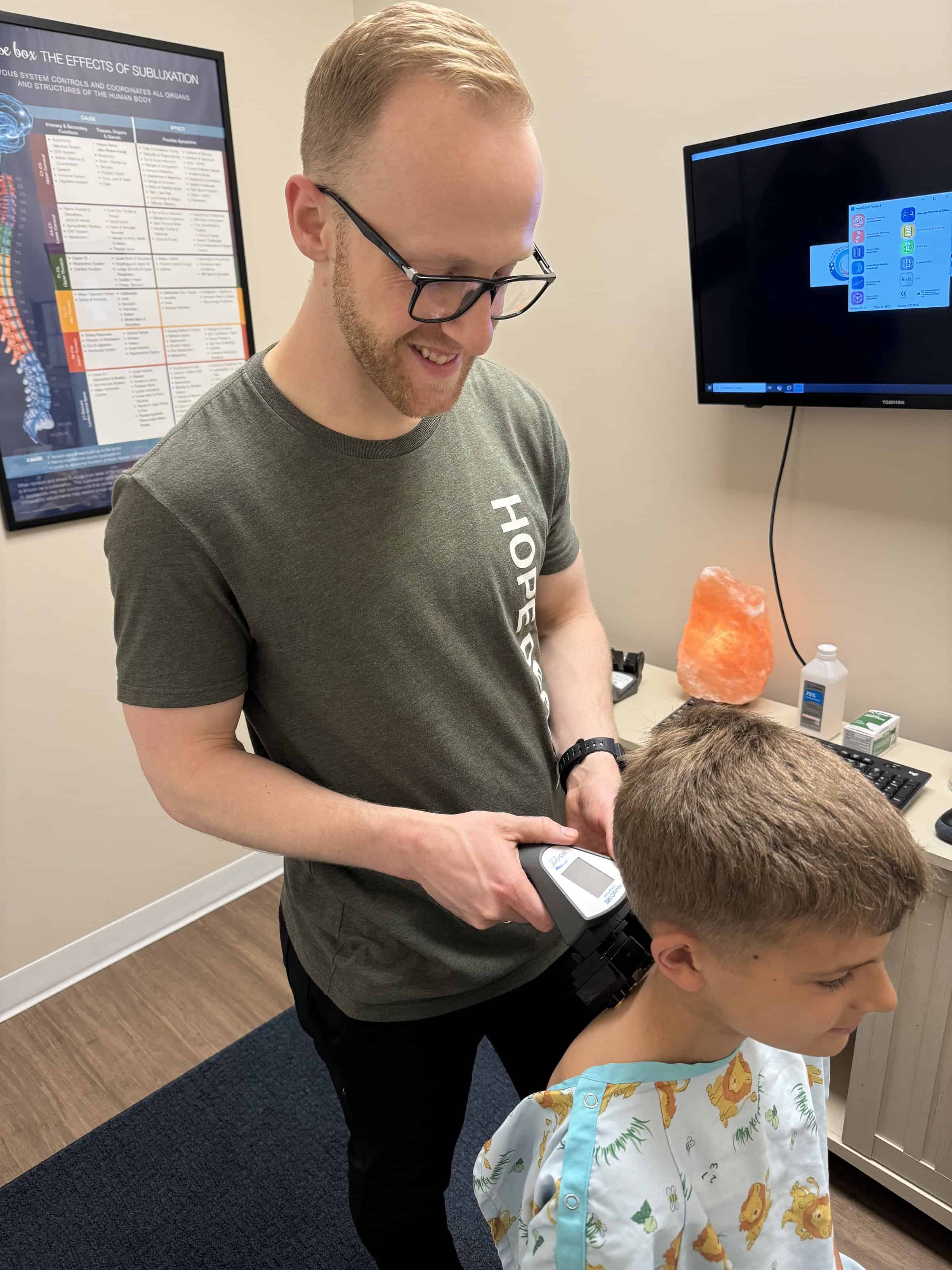
Neurologically based chiropractors use high-tech scans (like sEMG, HRV, and thermal) to see how a child's nervous system is functioning. These aren't pain scans — they're brain + body communication scans.
They tell us things like:
- Is the child stuck in fight-or-flight?
- Are there areas of tension, fatigue, or "disconnect"?
- Is the vagus nerve underpowered (poor regulation)?
- Is the body using too much energy to "cope"?
- Is there imbalance between the right and left sides of the nervous system?
Once we see the child's unique pattern, we use gentle, specific adjustments to help the nervous system reset, coordinate, and calm.
So How Does Chiropractic Actually Help Reactivity?
1. It Calms the Overactive Stress Response
Gentle adjustments improve signaling between the brainstem, vagus nerve, and spinal cord — the pathways that decide "am I safe?"
Kids become less triggered, less jumpy, and less explosive.
2. It Improves Emotional Regulation
When the nervous system stops running in emergency mode, the "front of the brain" (executive function) kicks back on.
Kids can pause, think, and choose, instead of reacting.
3. It Helps Sensory Processing
If your child gets overwhelmed by lights, sounds, transitions, or textures, that's sensory reactivity.
Balancing the motor system (sEMG findings) helps the sensory system finally catch up.
4. It Rebuilds Capacity (Their Battery)
So many reactive kids are actually exhausted deep in the nervous system. Adjustments help improve adaptability and vagal tone so they can handle more without tipping over.
5. It Creates More Consistent, Predictable Days
When their nervous system is more regulated ...
- mornings get smoother
- school is less triggering
- siblings become easier
- transitions no longer spark meltdowns
Parents often say, "It's like their fuse got longer."
Parents See Changes Like ...
- Faster calming
- Fewer meltdowns
- Better sleep
- More patience
- Less aggression
- More flexibility with transitions
- Happier mood
- Improved connection and communication
- Easier school and social situations
- Better digestion and immune resilience (yes — those are nervous-system-driven too!)
Why This Matters
Kids don't grow out of dysregulation.
They grow through it — when we help their nervous system find a healthier pattern.
Neurologically based chiropractic doesn't treat behavior. It supports the root cause of why reactivity happens.
It helps the child's nervous system feel safe, steady, and capable again.
That's when the real breakthroughs happen — emotionally, behaviorally, socially, and physically.