
If you’ve been diagnosed with Mast Cell Activation Syndrome (MCAS), you know the exhausting reality all too well. You’re juggling multiple antihistamines, tracking an ever‑changing list of triggers, and dealing with flushing, hives, digestive chaos, racing heart, and brain fog — often all at once, with no predictable pattern.
What makes it even more frustrating is hearing your doctors call it idiopathic — medical shorthand for “we don’t know why this is happening.” They help manage symptoms, but no one seems to ask the deeper question: Why did your mast cells become hypersensitive in the first place?
If this sounds like your story, you’re in the right place.
This is for people who are tired of living in fear of the next reaction, exhausted from medications that only offer temporary relief, and ready to understand the root cause that both conventional and functional medicine often overlook.
You’re about to see why MCAS is often a nervous system problem, not just an immune issue — and how the “Perfect Storm” so many people experience sets the stage for mast cell chaos.
The Pattern No One’s Connecting
We see the same pattern over and over: people with MCAS arrive with a diagnosis, a bag full of medications and supplements, and a growing list of triggers. They’ve seen allergists, immunologists, GI specialists, OBGYNs, endocrinologists, and functional medicine providers.
Everyone agrees the mast cells are overactive — but no one explains why.
Research shows mast cells respond directly to signals from the Autonomic Nervous System. When that system becomes dysregulated and stuck in chronic stress mode, mast cells become hypersensitive to normal stimuli that shouldn’t trigger them at all.
Understanding MCAS as a Nervous System Problem
Mast cells are your immune system’s first responders. They release histamine when they detect real danger — bacteria, viruses, toxins.
In MCAS, the activation threshold is far too low. Mast cells react to:
- Foods you used to tolerate
- Temperature changes
- Exercise
- Stress
- Random, unpredictable triggers
The missing explanation is this: the immune system is controlled by the autonomic nervous system, especially the vagus nerve.
Think of your nervous system like a car:
- Sympathetic system = gas pedal (fight‑or‑flight)
- Parasympathetic system = brake pedal (rest and recovery)
In MCAS, the gas pedal is stuck down and the brake pedal barely works. The nervous system misinterprets harmless things as threats, and mast cells release histamine in response to these false alarms.
This is sympathetic dominance — the perfect environment for mast cell chaos.
The “Perfect Storm” That Creates MCAS
MCAS doesn’t appear overnight. It develops through a series of stressors that accumulate over time and dysregulate the nervous system.
Stage 1: The Foundation
Stress during pregnancy affects fetal nervous system development. Birth interventions or trauma can push a baby’s nervous system into sympathetic overdrive from day one.
Stage 2: The Accumulation
A dysregulated nervous system often leads to:
- Colic
- Repeated ear infections
- Antibiotic use
- Steroid medications
- Poor sleep
- Digestive issues
These experiences disrupt the gut microbiome and immune system, adding more stress to a system already struggling.
Stage 3: The Breaking Point
After years in fight‑or‑flight, mast cells lose the ability to distinguish real threats from harmless stimuli. The activation threshold drops lower and lower.
This is why MCAS often appears alongside:
- POTS
- Ehlers‑Danlos Syndrome (EDS)
- Fibromyalgia
- Dysautonomia
All share the same root issue: Autonomic Nervous System Dysfunction.
Why Medications Alone Aren’t the Answer
Antihistamines, mast cell stabilizers, and leukotriene inhibitors are valuable tools — but they don’t address why mast cells are hypersensitive.
It’s like driving with the parking brake stuck. Pressing the gas helps you move, but it strains the entire system.
The vagus nerve is the brake pedal. When it’s not functioning well, your body can’t calm inflammatory responses. The nervous system stays stuck in threat mode, and mast cells keep overreacting.
This is why so many people continue to struggle despite multiple medications — the root cause remains unaddressed.
A Neurological Path Forward
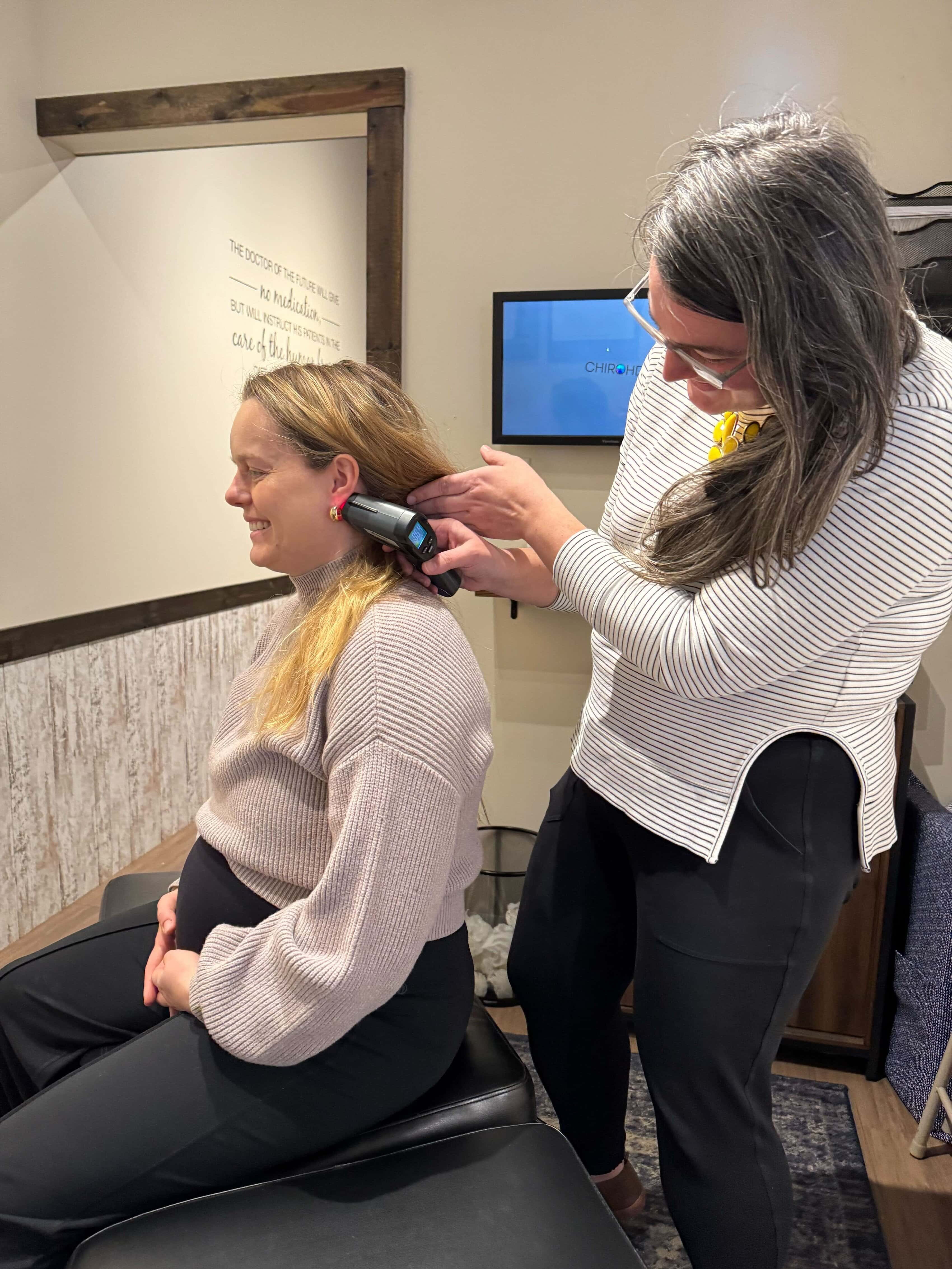
We use advanced INSIGHT neurological scanning technology to measure nervous system function objectively — something symptoms alone can’t reveal.
Common MCAS scan findings:
- High sympathetic activity (gas pedal floored)
- Low vagal tone (weak brake pedal)
- Neurological exhaustion
- Poor adaptability to stress
Once we can see these patterns, we address them with Neurologically‑Focused Chiropractic Care, targeting areas where the vagus nerve is most vulnerable.
As neurological function improves:
- Vagal tone increases
- The nervous system shifts out of threat mode
- Mast cell activation thresholds normalize
- Sensitivity to triggers decreases
Often, scans show improvement before symptoms do — a sign of true healing from the inside out.
What This Means for You
Understanding the nervous system connection changes everything. Instead of managing an ever‑growing list of symptoms, you now see the underlying dysfunction that needs support.
Your body isn’t broken.
It’s stuck in a pattern of dysregulation — and that pattern can change.
Taking the Next Step
If you’re struggling with MCAS and ready to explore the root cause, we’re here to help.
INSIGHT neurological scans take just 15–30 minutes and provide objective data about what’s happening deep within your nervous system. This allows us to create a targeted, drug‑free plan tailored to your needs.
Your nervous system and immune system are designed to heal, recover, and maintain balance — not to live in constant overreaction.
Your body isn’t the enemy.
Your mast cells aren’t the enemy.
They’re responding to a dysregulated control system.
When we restore balance to that system, everything else has the opportunity to fall back into place.
If you’re not local to Hope Chiropractic, the PX Docs directory can help you find an office near you.