No Results Found.
The page you requested could not be found. Try refining your search, or use the navigation above to locate the post.
The page you requested could not be found. Try refining your search, or use the navigation above to locate the post.

When Violet first came into our office, her birth history immediately stood out. Her heart rate had dropped during delivery. She required suction assistance, and her mom pushed for five hours. Experiences like that can place significant stress on a newborn’s nervous system, particularly in the upper cervical spine and sacrum.
Not long after birth, her parents began noticing patterns that didn’t feel typical. She struggled with constipation and gas. Rashes appeared around her belly button, neck, and knees. Sleep came in short stretches of two to three hours at a time. They were told to “give it time” and that her body would adjust, but time alone was not resolving what they were seeing.
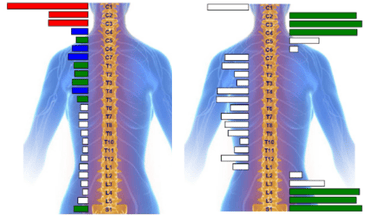
Her initial scans gave us objective confirmation of what her parents were observing at home. We saw upper cervical dysregulation and sacral imbalance — a pattern commonly associated with birth stress. Instead of a smooth, organized thermal gradient from the base of the spine to the upper neck, her scans showed irregular and defensive activity. In simple terms, her nervous system was operating in protection mode rather than regulation. This pattern helps explain why digestion, skin, and sleep were affected. The upper neck plays a significant role in vagal tone and overall regulation, while the sacrum influences bowel function and elimination. When those areas are under stress, symptoms like Violet’s are not random — they are predictable expressions of neurological imbalance.
Our focus was not on chasing constipation or clearing a rash. The goal was to restore organization within her nervous system so that communication between her brain and body could improve. Over time, that is exactly what we observed. Her digestion normalized completely. The rashes resolved. Sleep stretches became longer and more consistent. Her overall tone became calmer and more settled. As her parents noticed these changes at home, her follow-up scans reflected the same shift. The chaotic spikes softened, the gradients became smoother, and the sacral region stabilized. The nervous system began demonstrating more balance and reserve.
Today, Violet is not simply symptom-free. She is regulated. She rests well, digests well, and adapts more easily to everyday stressors. This case was never about fixing a single complaint. It was about supporting a young nervous system that had been overwhelmed early in life. Once that system regained stability, her body began doing what it was designed to do — grow, regulate, and function with resilience.