When Roy first came into our office, his story was layered and complex. He had words at two years old — and then they stopped. Speech became harder. Stimming increased. Emotional outbursts were unpredictable. Daily life revolved around managing overwhelm. His family had already pursued ABA, speech therapy, OT, nutrition support, and multiple specialists. There had been progress — but it was slow, and something still felt incomplete.
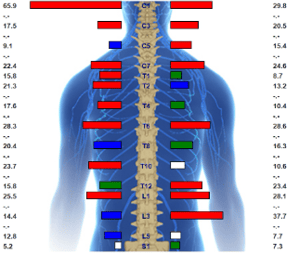
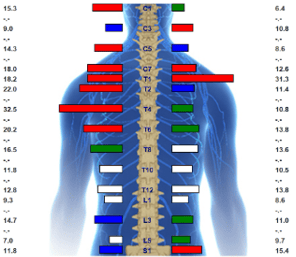
Clinically, what stood out was not just speech delay. It was dysregulation. Roy’s nervous system was operating in constant overdrive. His initial scans showed elevated total energy, poor symmetry, and disorganized patterning — a system working hard but inefficiently, without much reserve. That kind of neurological stress often shows up as emotional volatility, sensory overwhelm, gut instability, and difficulty processing or communicating clearly.
Our care focused on neurological organization. Rather than chasing speech or trying to suppress stimming, we worked to calm and stabilize his nervous system, improve brain-body communication, and build regulation capacity from the inside out.
Over time, the shifts became noticeable. Dad shared, “He’s much calmer in the car and in general.” School days became more consistent. Emotional swings weren’t as extreme. Stool improved. Sleep stabilized. Redirecting him became easier. He was more present and more connected.
Then came a moment that mattered deeply to his family. Dad told us, “He quoted a movie for the first time — ‘No retreat, no surrender!’ — and that was huge for us.” That wasn’t just a phrase. It was a breakthrough in communication and connection.
Objectively, his scans tell the same story. His symmetry has improved significantly. His patterning is stronger and more organized. His nervous system is no longer stuck in chaotic overdrive — it is stabilizing and building capacity.
In his recent re-evaluation, his dad wrote, “Roy has many ups and downs. His overall regulation has improved dramatically through this process.”
This case was never about “fixing autism.” It was about supporting an overwhelmed nervous system so it could mature and regulate more effectively.
When the nervous system becomes more organized, children gain the ability to process, connect, and grow in ways that were previously difficult or inconsistent.