
Friday night lights. Saturday morning soccer. Cross country meets, volleyball tournaments and a minivan that never seems to stop moving.
Fall sports season in Indiana is here, and for a lot of families it’s the busiest (and most fun) stretch of the year.
It’s also a season that asks a lot of growing bodies.
So while you’re washing uniforms and packing water bottles, here’s something we want you to think about:
How well is your athlete’s body adapting to everything the season is asking of it?
The Season Asks a Lot
Practice isn’t the only thing on your athlete’s plate.
During the fall, most kids are juggling:
- Daily practices and weekend games
- Early mornings and late nights
- Homework, tests and a full school day
- Meals on the go
- The pressure of wanting to play well
That’s physical stress, mental stress and emotional stress, all at the same time.
And the body has to keep up with every bit of it.
Your Nervous System Runs the Whole Game
Every sprint, every pass, every quick change of direction starts in the same place.
The nervous system.
It’s the communication system between the brain and the body. It coordinates balance, timing, reaction and focus. It’s also what tells the body when to gear up and when to rest and recover.
When a young athlete is running on a packed schedule and not much downtime, the body can spend more time in fight-or-flight and less time in recovery mode.
And recovery is where the body adapts to all that hard work.
To be clear, chiropractic care isn’t a shortcut to a starting spot, and it doesn’t replace your athletic trainer or your child’s doctor.
Instead, neurologically-based chiropractic care focuses on helping the nervous system function and adapt more efficiently, on game day and every day in between.
How We Support Athletes at Hope Chiropractic
We don’t just ask, “What position do you play?”
We want the bigger picture.
How are they sleeping?
How is their energy by the end of the week?
How quickly do they bounce back after a big game?
How are they handling the pressure?
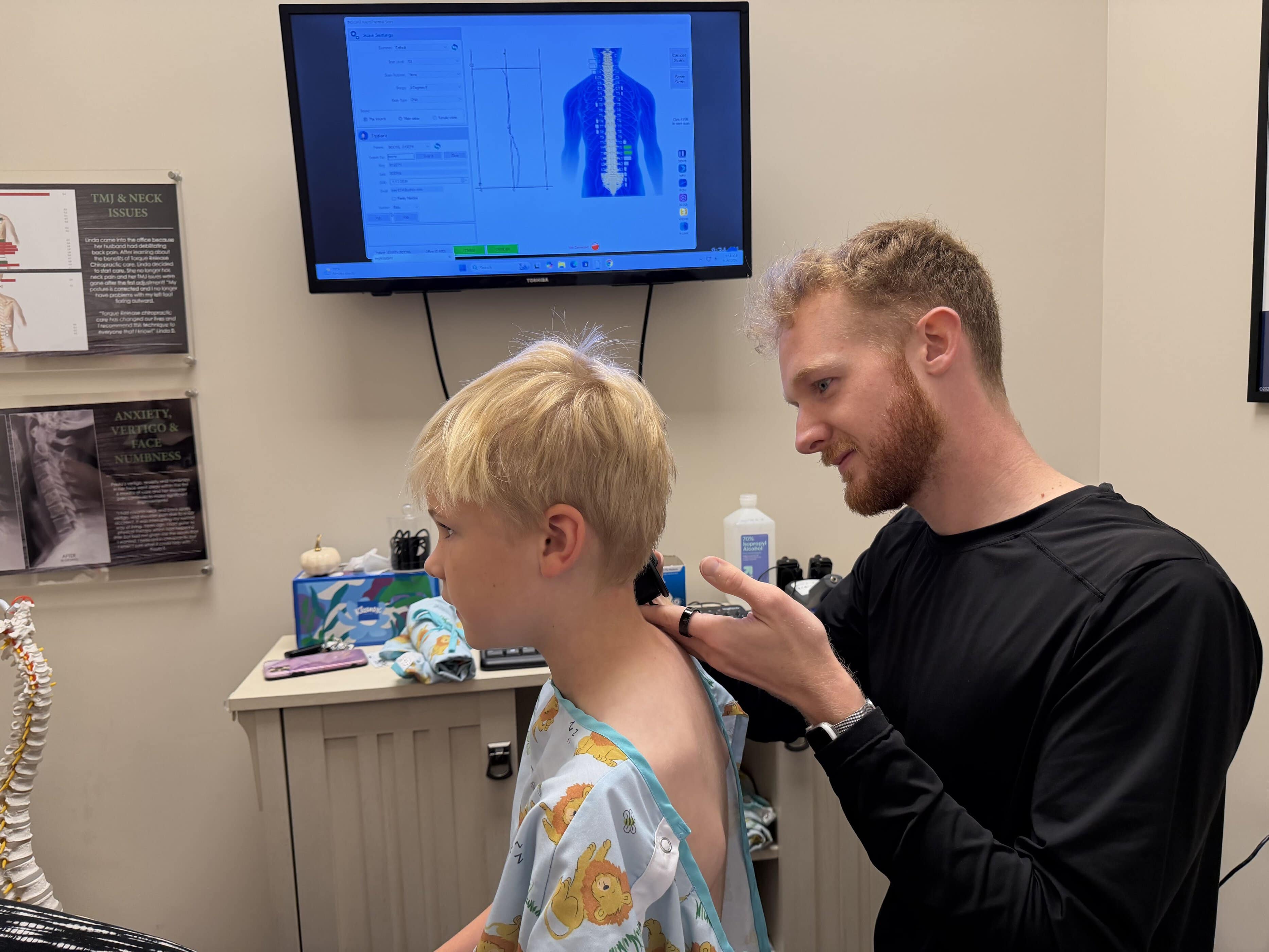
At Hope Chiropractic, we use objective neurological scans to look at how your athlete’s nervous system is functioning and adapting. Those scans give us information about patterns that may show the body is carrying more stress than it can comfortably handle.
From there, we build a plan of gentle, specific adjustments designed around your child and their season.
Game-Week Habits That Help at Home
- Protect sleep. It’s when the body does its best recovering. Aim for a steady bedtime, even on game nights.
- Keep water handy. Send a full bottle to school, not just to practice.
- Fuel before and after. A real meal beats a drive-through snack whenever you can manage it.
- Build in downtime. One unscheduled evening a week goes a long way.
- Power down screens before bed so the brain can shift into rest mode.
One more important note: any hit to the head should be checked by a medical provider before your athlete returns to play.
More Than Just Getting Through the Season
We can’t lighten the practice schedule or shorten the tournament weekends.
But we can support the system that helps your athlete adapt to all of it.
That’s why at Hope, we don’t want your athlete to simply make it to the final whistle.
We want to help them build a stronger foundation for adaptation, recovery and resilience, this season and for all the seasons ahead.
If you’d like to see how your athlete’s nervous system is handling the season, we’d love to meet your family.
Because the best seasons aren’t just about the scoreboard.
They’re about kids who feel good, play hard and love the game. 💙