No Results Found.
The page you requested could not be found. Try refining your search, or use the navigation above to locate the post.
The page you requested could not be found. Try refining your search, or use the navigation above to locate the post.

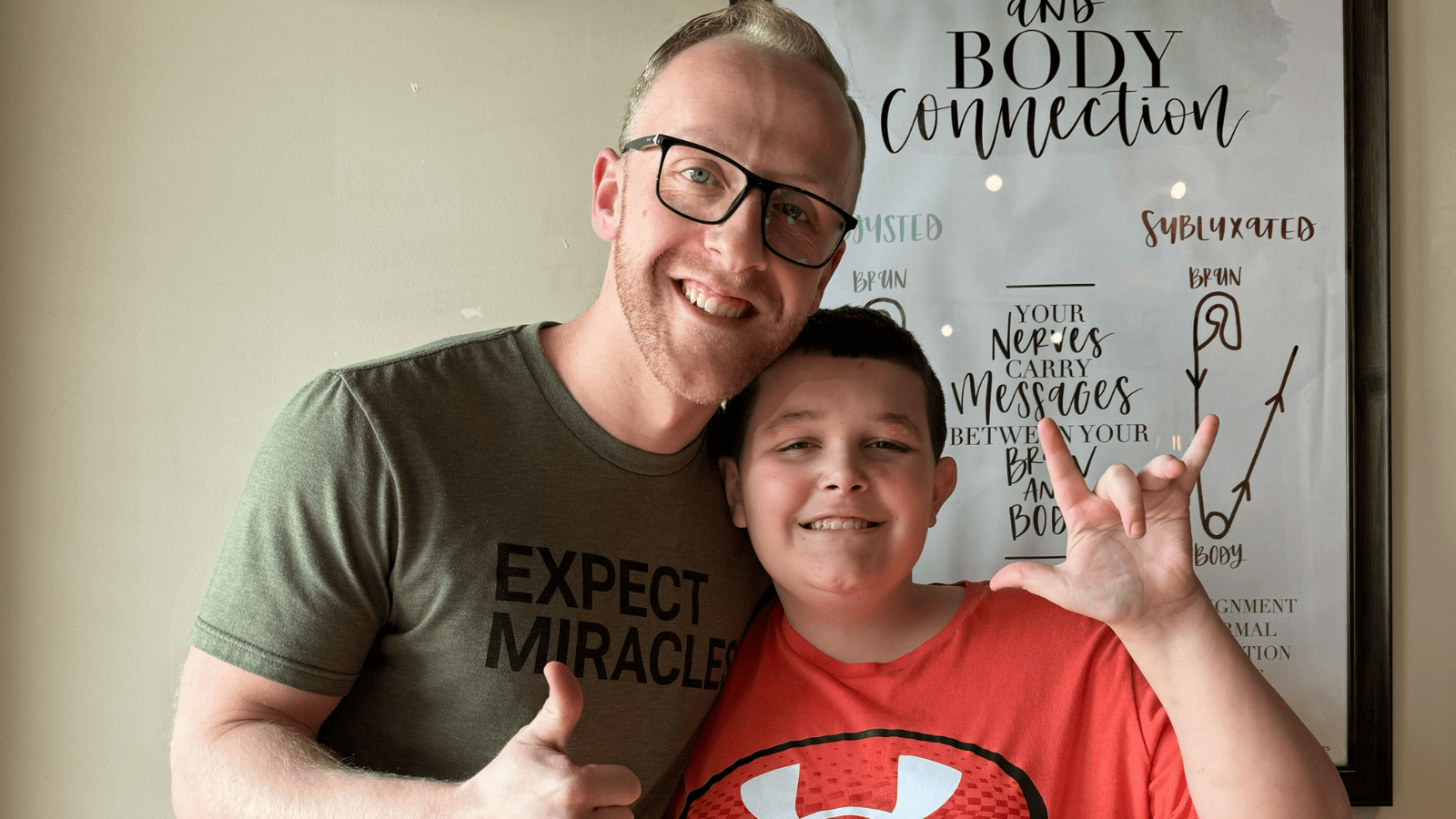
When Cooper first walked into our office, he carried a long history with him. Diagnosed with ASD, ADHD, and anxiety in elementary school, he had already tried what his mom described as “everything in the book” — specialists, medications, diet changes, therapies. Some things helped temporarily. Nothing truly stabilized his system.
By 7th grade, things had escalated. As his mom shared, he was “not a happy kid,” and she felt “defeated, tired, and weary.” From a clinical standpoint, what we saw wasn’t random behavior. We saw a nervous system stuck in chronic stress. His scans showed significant sympathetic dominance — disorganization in brain-body communication, poor adaptability, and very little neurological reserve. He wasn’t broken. He was overwhelmed. Our goal wasn’t to fix a diagnosis. It was to calm and organize his nervous system so his brain and body could communicate more effectively. Care focused on restoring regulation first — not chasing symptoms. The early shifts were subtle but important. Fewer explosive outbursts. Slight improvements in mood. Then sleep began stabilizing. As sleep improved, attention became more consistent. Emotional regulation followed.
By October and November, we were seeing measurable changes on scans — improved organization, better symmetry, increased capacity. At home, his parents were seeing something even more meaningful. As his mom said, “Around October/November, we started seeing a different kid.” He began going to school without a fight. He was happier at school and at home. Spring Break came and went — no issues. He became more open, more engaged, more independent.
Since beginning care, this has been the only major change added to his health routine — and his family has even been able to reduce some prescription medications. What we see today is not perfection. It’s resilience. His scans now reflect a nervous system with more balance, more stability, and more capacity to handle stress. As his mom shared, “We are on a path of healing this kid from the inside out… We have HOPE.” That’s what this case represents. Not a quick fix. But a nervous system that is finally able to do its job.